VisualGPT AI Old Photo Restoration and ImageEditor are often discussed in the context of “bringing old photos back to life.” In practice, the real challenge is knowing when restoration has gone too far. Many failed restorations do not suffer from a lack of technology, but from excessive intervention.
This article approaches AI Old Photo Restoration from a critical angle: why over-restoration is one of the most common mistakes, how VisualGPT avoids it by design, and how ImageEditor fits into the workflow only after historical integrity has been secured.
The Most Common Restoration Mistake Is Trying to Fix Everything
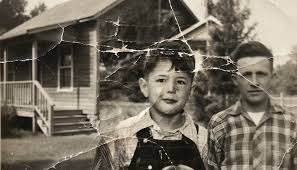
Old photos almost always contain imperfections. Fading, grain, scratches, and uneven exposure are expected outcomes of time. The mistake many tools and users make is assuming that every imperfection must be removed.
VisualGPT AI Old Photo Restoration is built on a different assumption: some imperfections are part of the record.
Instead of attempting to produce a “perfect” image, the AI focuses on restoring visual coherence. Faces become recognizable, forms regain definition, and contrast becomes readable, but traces of age are not aggressively erased. This restraint is intentional.
Why VisualGPT AI Old Photo Restoration Avoids Visual Reinterpretation
A restored photo should not introduce new information. This principle guides the design of VisualGPT AI Old Photo Restoration.
Structural Recovery Over Cosmetic Enhancement
The AI prioritizes edges, spatial relationships, and tonal structure. These elements define what the photo depicts. Cosmetic enhancement—such as smoothing skin, altering textures, or exaggerating contrast—is deliberately minimized.
This is especially important for historical faces. Slight changes in facial structure can alter identity. VisualGPT’s restoration logic reconstructs missing clarity without reshaping expressions or proportions.
Respecting the Limits of the Source Material
Old photos were produced under technical constraints that shaped their appearance. Film grain, lighting limitations, and printing techniques all influenced the final image. VisualGPT AI Old Photo Restoration respects these constraints instead of replacing them with modern aesthetics.
The goal is not to simulate how the photo would look if taken today, but to clarify how it likely looked when it was taken.
Restoration as an Act of Interpretation, Not Creation
Every restoration involves interpretation. The difference lies in how much interpretation is imposed. VisualGPT AI Old Photo Restoration minimizes guesswork by relying on probabilistic reconstruction rather than stylistic assumptions.
This is why restored images often feel “quiet.” They do not draw attention to the restoration itself. The viewer notices the subject, not the process.
For historians, families, and archivists, this subtlety matters more than visual impact.
When Restoration Is Finished, New Problems Appear
Once an image is restored conservatively, it often becomes usable—and that usability introduces new practical issues. Cleaned details can reveal scanning borders, legacy watermarks, or background distractions that were previously obscured.
This is the point where ImageEditor becomes relevant.
ImageEditor does not replace restoration. It operates after restoration decisions are complete. Its role is not historical correction, but contextual adaptation.

(ImageEditor perates after restoration decisions are complete)
imageeditor as a Post-Restoration Adjustment Layer
imageeditor is best used once the image’s historical integrity is already secured. It supports tasks such as:
- Removing visible watermarks from digitized sources
- Cleaning uneven edges caused by physical damage or scanning
- Adjusting framing for digital archives or publication layouts
Because these adjustments are AI-based and non-destructive in intent, they do not interfere with the restored visual structure created by VisualGPT.
This separation of responsibilities prevents the most common restoration failure: blending repair and presentation into a single, irreversible step.
Why Conservative Restoration Scales Better Over Time
Over-restored images age poorly. As visual standards evolve, aggressive enhancements become obvious and distracting. Conservatively restored images remain flexible.
VisualGPT AI Old Photo Restoration produces images that can be reused, re-edited, and re-contextualized without repeating the restoration process. ImageEditor can then be applied whenever presentation requirements change.
This layered approach supports long-term archives rather than one-off outputs.
Conclusion: Good Restoration Is Defined by What It Leaves Untouched
VisualGPT AI Old Photo Restoration (https://visualgpt.io/ai-old-photo-restoration) succeeds by knowing where to stop. By prioritizing structural clarity and historical fidelity, it avoids the visual excesses that undermine many restoration efforts.
ImageEditor (https://imageeditor.online/) complements this philosophy by handling practical adjustments after restoration is complete, ensuring that restored images function well in modern contexts without compromising their integrity.
Together, they support a disciplined, realistic approach to AI Old Photo Restoration—one that values accuracy, restraint, and long-term usability over visual spectacle.