


For the last three flawless decades, Carbon Fiber Reinforced Polymer (CFRP) has been the darling of the engineering world. It is the superhero of materials: lighter than aluminum, stronger than steel, and stiff enough to hold the wings of a Boeing 787 steady in a hurricane.
From Formula 1 race cars to high-end bicycles and wind turbine blades, the world has gone “carbon crazy.” We have eagerly swapped out heavy metals for this sleek, black weave in the name of efficiency. A lighter plane burns less fuel. A lighter electric vehicle has more range. In the operational phase of its life, carbon fiber is an environmental hero.
But there is a dark secret looming at the end of the runway.
When a steel car crashes, we melt it down and make a new car. Steel is infinitely recyclable. When an aluminum can is tossed, it becomes another can in 60 days.
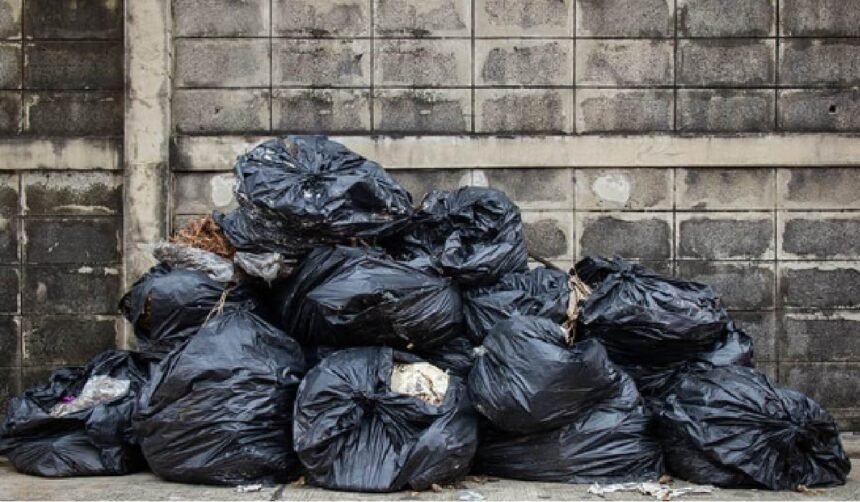
But when a carbon fiber wind turbine blade reaches the end of its 20-year life? We bury it.
We are currently sitting on a ticking time bomb of “un-recyclable” waste. As the first generation of mass-produced composite structures—early wind farms and aircraft—begins to age out of service, the industry faces an existential crisis. If we cannot figure out how to close the loop, the very material that promised to save the planet might end up clogging it.
The Chemistry of the “Forever” Part
The problem isn’t the fiber; it’s the glue.
Carbon fiber composites are made of two distinct parts: the fibers (which provide the strength) and the matrix (the resin/epoxy that holds them together).
In the vast majority of high-performance applications, we use “thermoset” resins. Think of an egg. Once you boil an egg, you cannot un-boil it. The chemical reaction is irreversible. You cannot melt a thermoset resin and reshape it like you can with a plastic water bottle (which is a “thermoplastic”).
Once a carbon fiber part is cured, it is a solid, cross-linked monolith. You cannot separate the expensive carbon fibers from the hard, cured epoxy without destroying one or both of them.
This durability is exactly what makes the material so good for airplanes. You don’t want your wings to melt or soften in the heat. But it is exactly what makes it a nightmare for the recycler. To recover the valuable fibers, you have to somehow destroy the indestructible glue that encases them.
The Landfill Option
For years, the industry’s solution has been simple: hide it.
Wind turbine blades are enormous—sometimes nearly 300 feet long. They are cut into sections using diamond-tipped saws and hauled to landfills. In the US and Europe, thousands of blades are currently buried in shallow graves.
This is a public relations disaster waiting to happen. It undermines the “green” credentials of renewable energy. How can wind power be sustainable if the hardware itself is single-use trash?
Furthermore, as the automotive industry eyes carbon fiber for mass-market EVs to offset heavy battery weights, the volume of waste is set to explode. We aren’t talking about a few thousand blades anymore; we are talking about millions of car chassis. If the disposal method remains “bury it,” regulators will step in. The European Union is already tightening rules on End-of-Life Vehicles (ELV), demanding high recyclability rates that current composites simply cannot meet.
The Pyrolysis Solution: Burning the Haystack to Find the Needle
So, how do you un-boil the egg? The leading contender is a process called Pyrolysis.
In this method, the scrap composite is chopped up and thrown into an oven without oxygen. It is heated to roughly 500°C. At this temperature, the resin decomposes (turns into gas and oil), but the carbon fibers—which are made of pure carbon and can withstand extreme heat—remain intact.
It sounds perfect, but there is a catch.
The process is energy-intensive. You are burning a lot of gas to save the fiber. More importantly, the fibers that come out aren’t the same as the ones that went in. They are “downcycled.”
Virgin carbon fiber is a continuous, long filament. It is strong because it is unbroken. The recycled fiber is short, chopped, and “fluffy.” It has lost its alignment. You cannot use it to build another airplane wing. You can only use it for non-structural parts, like interior panels, laptop cases, or asphalt reinforcement.
The value proposition drops. You paid $15/lb for the virgin fiber, but the recycled “fluff” is only worth $2/lb. The economics of recycling are upside down. It costs more to recover the material than the material is worth.
The Solvolysis Hope: dissolving the Glue
A newer, more promising approach is Solvolysis. Instead of burning the resin off, you dissolve it using supercritical fluids (like alcohol or water at high pressure and temperature).
This is a chemical attack. It breaks the resin down into its base monomers, which can technically be reused to make new resin. Crucially, it is gentler on the fibers. It allows for the recovery of longer, higher-quality fibers that retain nearly all of their original strength.
The hurdle here is scale. Solvolysis is currently a batch process. It happens in high-pressure reactors. It is expensive and slow compared to the continuous furnaces of pyrolysis. Scaling this up to handle the megatons of waste coming our way is a massive engineering challenge.
The “Thermoplastic” Pivot
The ultimate solution might not be better recycling, but better materials.
The industry is slowly pivoting toward “Thermoplastic” composites. Unlike the boiled egg (thermoset), thermoplastics are like chocolate. You can melt them, shape them, cool them, and then melt them again.
If an aircraft wing were made of thermoplastic carbon fiber, you could theoretically grind it up at the end of its life, melt it down, and mold it into a seat bracket. The material stays in the loop.
This requires a fundamental shift in composite manufacturing infrastructure. The machines that lay up thermosets (autoclaves) are different from the machines that process thermoplastics (presses and ovens). It requires billions of dollars in new tooling and re-certification of safety standards.
Conclusion
The carbon fiber industry is at a crossroads. For thirty years, the focus has been entirely on “Performance at all costs.” Can we make it lighter? Can we make it stiffer?
The next thirty years must be about “Circularity.” The question is no longer just “Will it fly?” but “Where will it go when it lands for the last time?”
If the industry cannot solve the recycling puzzle—either through chemical wizardry or a shift to thermoplastics—it risks becoming a pariah. We cannot build the green future out of black trash. The race is on to turn the “forever chemical” bond of the composite into a temporary marriage, allowing us to harvest the valuable carbon skeleton and let the resin go. Until then, the most advanced material on earth remains, ironically, the most primitive to dispose of.