


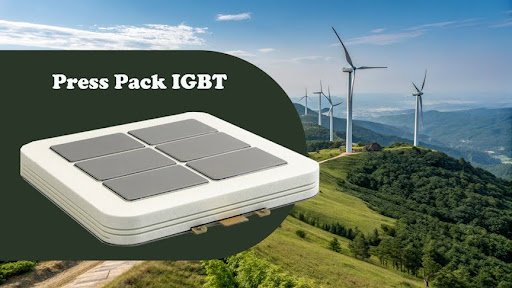
The power electronics industry faces critical decisions when selecting IGBT topologies for high-voltage direct current (HVDC) transmission systems and medium voltage motor drives, where power levels range from hundreds of kilowatts to tens of megawatts. Two fundamentally different packaging approaches dominate these applications: traditional module IGBTs employing wire-bonded chips in plastic-encapsulated housings, and press pack IGBTs utilizing compression-mounted semiconductor discs in hermetically sealed ceramic-metal assemblies. While module IGBTs offer lower initial costs and simplified mounting procedures, press pack designs provide superior reliability, thermal performance, and failure mode characteristics essential for mission-critical infrastructure.
The structural differences between these packaging technologies create fundamental performance distinctions that transcend simple cost comparisons. Module IGBTs rely on solder joints connecting semiconductor chips to substrates, aluminum wire bonds linking chip surfaces to terminals, and silicone gel encapsulation protecting internal structures. Each of these elements represents a potential failure point: solder fatigue from thermal cycling, wire bond liftoff from current stress, gel degradation from environmental exposure. In contrast, press pack IGBT configurations eliminate these vulnerable elements through direct pressure contact between semiconductor discs and molybdenum electrodes within hermetically sealed packages. The compression force—typically 10-30 kN depending on device rating—maintains electrical and thermal contact without bonding materials susceptible to fatigue or degradation.
The evolution of press pack technology specifically for IGBT applications has accelerated dramatically as manufacturers recognize the growing demand for devices capable of reliable operation in the most demanding power electronics applications. Next-generation press pack IGBT designs incorporate advanced semiconductor structures including field-stop technology and optimized gate designs that deliver substantial reductions in conduction and switching losses compared to earlier generations. These improvements enable press pack IGBTs to match or exceed the electrical performance of module alternatives while retaining the inherent reliability advantages of pressure contact packaging.
Thermal Management and Power Cycling Capability
Thermal performance fundamentally determines IGBT reliability, as junction temperature excursions and cycling directly influence device lifetime through various degradation mechanisms.
Heat extraction efficiency differs substantially between packaging approaches. Module IGBTs employ a thermal path from junction through solder, substrate (typically ceramic), base plate, and thermal interface material to heat sink. Each interface in this path introduces thermal resistance and potential reliability concerns. Press pack designs eliminate multiple interfaces, conducting heat directly from silicon through molybdenum electrodes to double-sided heat sinks. This simplified thermal path reduces overall thermal resistance by 20-30% compared to equivalent module implementations, enabling either higher current density or reduced junction temperature at equivalent power levels.
Thermal cycling endurance represents a critical reliability metric for applications experiencing variable loading. Module IGBTs suffer from coefficient of thermal expansion (CTE) mismatches between materials—silicon (2.6 ppm/°C), aluminum wire bonds (23 ppm/°C), copper substrates (17 ppm/°C)—creating mechanical stress during temperature changes that accumulates over thousands of cycles. Industry testing reveals module IGBT power cycling capability typically ranges from 50,000-300,000 cycles to failure depending on temperature swing magnitude. Press pack IGBTs, with their pressure contact interfaces accommodating thermal expansion without accumulated stress, routinely achieve 1-2 million cycles under equivalent conditions—a 5-10x improvement enabling substantially extended operational life in variable load applications including renewable energy inverters and traction drives.
Double-sided cooling architecture available with press pack designs enables symmetric heat extraction from both surfaces of the semiconductor disc. This configuration reduces thermal resistance by 40-50% compared to single-sided cooling, effectively doubling power handling capability for a given junction temperature limit. Module IGBTs cannot implement true double-sided cooling due to wire bond connections occupying the top surface, restricting them to single-sided heat extraction through the base plate. For space-constrained applications requiring maximum power density, this architectural advantage proves decisive.
Reliability and Failure Mode Characteristics
The mission-critical nature of HVDC systems and medium voltage drives demands not only low failure rates but also predictable, safe failure modes when faults inevitably occur.
Failure rate data from field installations and accelerated testing demonstrates substantial differences in long-term reliability. Module IGBT failure rates in industrial applications typically range from 50-200 FIT (failures in time—failures per billion device hours), with failures often occurring unpredictably due to progressive degradation of wire bonds or solder joints. Press pack IGBTs achieve 10-30 FIT in equivalent applications, reflecting their elimination of the primary failure mechanisms affecting modules. For a medium voltage drive containing 100 IGBT devices operating 8000 hours annually, this reliability difference translates to mean time between failures of 6-8 years for module-based systems versus 25-40 years for press pack implementations.
Failure mode behavior critically impacts system-level reliability and safety. Module IGBT failures commonly result in short-circuit conditions as wire bonds or metallization fail, potentially creating catastrophic system faults requiring immediate shutdown and extensive repairs. Press pack devices predominantly fail to open-circuit states as the pressure contact naturally separates during terminal thermal events, gracefully removing the failed device from the circuit without creating short-circuit faults. This inherent fail-safe characteristic enables:
- Redundant device operation where remaining healthy devices in parallel arrays continue operating after single device failure
- Reduced risk of secondary damage to adjacent components or system infrastructure
- Simplified fault detection and isolation procedures
- Enhanced personnel safety during maintenance operations
Environmental resilience proves critical for installations in harsh conditions including offshore wind platforms, desert solar farms, and heavy industrial facilities. Module IGBT encapsulation, while providing some environmental protection, remains vulnerable to moisture ingress, contaminant penetration, and mechanical damage. The hermetically sealed ceramic-metal package of press pack devices provides superior protection against humidity (maintaining <100 ppm internal moisture), corrosive atmospheres, and mechanical shock—enabling reliable operation in conditions that would rapidly degrade module alternatives.

Application-Specific Considerations
The choice between module and press pack IGBTs depends heavily on application requirements, operational profiles, and economic analyses.
HVDC transmission systems representing the highest voltage and power applications (±320kV, multi-GW power transfer) universally employ press pack IGBTs (or press pack thyristors for voltage source converter designs). The extreme reliability requirements—submarine cable installations where failures create catastrophic economic losses, remote converter stations minimizing maintenance interventions—justify the higher initial costs of press pack devices. Series connection of hundreds of press pack IGBTs in HVDC valve assemblies benefits from their predictable failure modes and immunity to progressive degradation mechanisms.
Medium voltage motor drives (2.3-13.8kV, 0.5-40MW) serving critical industrial processes including compressors, pumps, and fans increasingly specify press pack IGBTs despite modestly higher initial costs. Total cost of ownership calculations incorporating:
- Reduced downtime from higher reliability and fewer maintenance interventions
- Extended operational lifetime (15-20 years press pack vs. 7-10 years modules)
- Lower spare parts inventory requirements
- Reduced cooling system costs due to superior thermal performance
consistently favor press pack implementations for high-utilization applications where drive unavailability creates substantial production losses.
Renewable energy converters including wind turbine generators (2-15MW) and large-scale solar inverters (1-5MW central inverters) benefit from press pack IGBT reliability in harsh environmental conditions and variable loading profiles. The extended power cycling capability directly addresses the thermal stress from fluctuating renewable generation, while environmental resilience suits offshore wind and desert solar installations. As project economics increasingly depend on maximizing energy production over 25-30 year project lives, the reliability advantages justify premium component selection.
Future Technology Trajectories
Both press pack and module IGBT technologies continue advancing, but development trajectories suggest growing advantages for pressure contact packaging as voltage and power levels increase.
Silicon carbide (SiC) implementation in press pack configurations enables operation at junction temperatures exceeding 175°C—impossible with conventional module packaging materials. SiC press pack devices rated for 6.5-13kV blocking voltage and 200°C junction temperature will enable radical increases in power density and efficiency in next-generation HVDC and drive applications.
Advanced semiconductor structures including reverse-conducting IGBTs (eliminating separate diode chips) and injection-enhanced gate transistors integrate naturally into press pack formats, maximizing the performance benefits of these innovations while maintaining proven packaging reliability.
The convergence of higher voltage requirements, increasing reliability expectations, and advancing semiconductor technologies positions press pack IGBTs as the technology of choice for the most demanding power electronics applications, justifying their premium positioning through unmatched performance and reliability in mission-critical systems.