Tattooing in Another Language? How a Tattoo Font Generator Helps You Get the Script Right and Beautiful

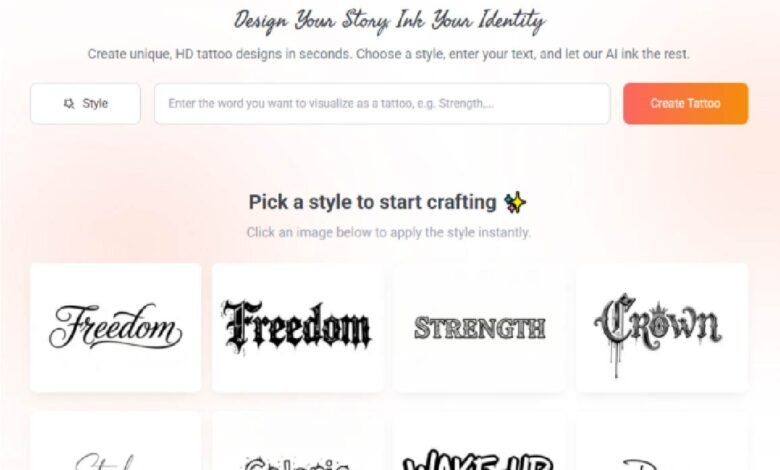
Foreign language tattoos are among the most commonly misexecuted tattoos in existence. Misspelled Latin. Structurally incorrect Chinese characters. Arabic that reads backwards. Japanese hiragana mixed accidentally with katakana. These aren’t rare edge cases — they’re some of the most documented tattoo mistakes on the internet.
And yet foreign language tattoos remain deeply popular — because tattooing a word in another language often carries a specific resonance that the same word in English doesn’t.
This guide covers the key risks and principles for foreign language tattoo lettering, and explains how a tattoo font generator helps you achieve both accuracy and beauty.
Why Foreign Language Tattoos Go Wrong
Foreign language tattoo mistakes cluster around two problems: accuracy and aesthetics.
Accuracy problems: The wrong characters are used. The grammar is incorrect. The word exists in the source language but carries a completely different connotation than intended. The script direction is wrong. The romanization is used instead of the native script.
Aesthetic problems: The correct characters are used, but in a font style completely inappropriate for tattooing. The letterforms lack the expressiveness and visual weight needed for tattooed text. The font was designed for digital display, not for skin. The proportions work in print but fail at tattoo scale.
Both types of mistakes are entirely preventable with the right preparation.
The Most Common Foreign Language Tattoo Requests
Latin Latin tattoo phrases have a long history. They carry academic, historical, and ceremonial weight. The most common mistakes involve incorrect declension (Latin grammar is case-based) and incorrect verb forms.
Arabic Arabic is written right-to-left. The letterforms are connected and change shape depending on their position in a word. It’s a visually stunning script when executed correctly — and immediately obvious when it’s wrong to any Arabic reader.
Chinese Chinese characters are logographic — each character represents a concept, not a sound. The most common mistake is using characters that look similar to the intended meaning but actually mean something different, or using simplified rather than traditional characters (or vice versa) without intention.
Japanese Japanese uses three scripts that can be mixed: kanji (Chinese-origin characters), hiragana, and katakana. Mixing scripts incorrectly or using the wrong script for a context looks illiterate to Japanese readers.
Sanskrit and Devanagari Sanskrit in Devanagari script is popular for spiritual and yogic tattoos. The letterforms are complex and connected — errors in the connecting strokes between letters create mistakes that aren’t visible to non-readers but are immediately apparent to anyone familiar with the script.
Accuracy First: Verification Before Design
Before thinking about font aesthetics, verify the accuracy of your text independently. This step is non-negotiable.
Have the text reviewed by a native speaker or scholar of the source language — not just a translation app. Translation apps are reliable for meaning but often produce grammatically incorrect or stylistically odd constructions in other languages.
For character-based scripts (Chinese, Japanese, Arabic, Devanagari), verify that each individual character is correct and that the combination makes sense in the source language context.
Only move to font and aesthetic decisions after you’re confident in the accuracy of the text itself.
The Aesthetic Challenge of Foreign Scripts
Once you’ve confirmed accuracy, the aesthetic challenge begins. And it’s a genuine challenge — particularly for scripts that are very different from Latin alphabet typography.
The best foreign script tattoo fonts share these qualities:
Letterform authenticity. The characters or letters should be drawn according to the conventions of the source script tradition. A Latin-influenced rendering of Arabic letterforms, for example, often looks strange to Arabic readers and doesn’t honor the script’s visual heritage.
Appropriate weight and scale. Foreign scripts often have specific conventions about line weight and proportional relationships between strokes. Fonts that violate these conventions look wrong even to viewers who can’t read the script.
Tattoo-appropriate expressiveness. The font should carry visual character suitable for tattooing — not be optimized for small screen text or print.
Using a Tattoo Font Generator for Foreign Script Lettering
A tattoo font generator with calligraphy and handwriting capabilities can be particularly valuable for foreign script tattoos. Here’s how to use it effectively:
Generate the verified text. Input your confirmed, accurate text into the generator. Generate it across multiple style options to see the range of expressive possibilities.
Look for script-appropriate styles. For each foreign language, there are specific calligraphic traditions that are most appropriate for tattooing. Arabic calligraphy has specific named styles (Naskh, Thuluth, Nastaliq) each with distinct visual characters. Chinese calligraphy has regular, running, and cursive scripts. Understanding these traditions helps you identify which generated options are most authentic.
Have a native speaker evaluate the aesthetics. After generating your options, show them to a native speaker or someone familiar with the calligraphic tradition of the source language. Ask not just “is this accurate?” but “does this look beautiful and appropriate?”
Test at tattoo scale. Foreign scripts often have complexity that reads beautifully at display size but becomes unclear at tattoo dimensions. Test your chosen option at the exact planned tattoo size.
Final Thoughts
A foreign language tattoo done right is a genuinely beautiful piece — a word or phrase from another culture’s tradition, rendered in authentic script, carrying meaning that transcends language barriers. Done wrong, it’s a permanent error that no touch-up can fix.
Get the accuracy right first. Then use an AI tattoo font generator to find lettering that is beautiful, authentic to the script tradition, and appropriate for skin. Have both the text and the aesthetic evaluated by people who know the source language and culture.
The preparation takes time. The result is a tattoo that honors the language it uses.