


Ever see your heat pump lagging behind on a chilly morning? You’re not the only one. Air source heat pump grants are great for energy savings, but like any heating system, they can get into trouble. The good news? Many problems are straightforward to identify and repair once you know what to watch out for.
We’ll step through the most typical issues you can have with your air source heat pump and what to do about them.
Why isn’t my heat pump heating properly?
The suspects of choice are rather simple. Your air filters could be dirty with dust and grime. It’s like attempting to breathe with a scarf on;your system can’t draw in adequate air to function efficiently. Inspect your filters monthly and replace them when they appear grimy.
Low refrigerant is another frequent offender. Without sufficient refrigerant, your heat pump isn’t able to move heat efficiently. That normally indicates that there is a leak somewhere, and you’ll have to call in a professional to fix it.
Here’s something most people don’t know: your heat pump could just be too small for your house. Too small, and it will consume energy all the time without ever getting to your desired temperature. Too big, and it will turn on and off constantly, never running long enough to warm evenly.
Is That Ice Buildup Normal?
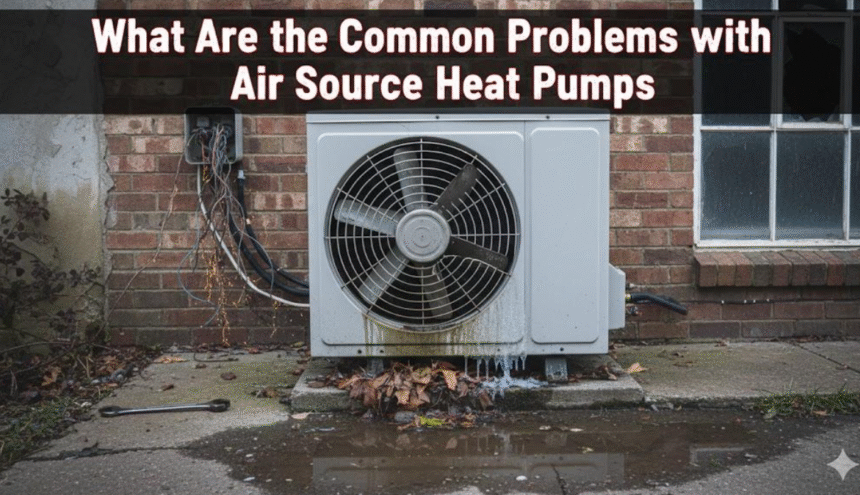
Newer heat pumps also include internal defrost cycles that temporarily reverse the system to melt ice away. When you notice there’s a build-up of too much ice, something is keeping this from working. Perhaps the defrost sensor is dead, or the control board is not kicking the cycle in when it needs to.
Blocked airflow is another major reason. Do leaves or snow accumulate around your unit? That blocks the airflow and leads to quicker ice buildup than the system can remove. Maintain at least two feet of space clear of any obstructions around your outdoor unit always.
What’s That Noise Coming From My Heat Pump?
Rattling typically indicates something loose or debris in the fan. Inspect for loose screws or items that have been blown inside the unit. Grinding or squealing is more severe; it typically indicates worn bearings or motor issues that require professional help.
Hissing noises? That may be refrigerant escaping. If you notice this accompanied by decreased performance, shut down your system and call for assistance right away.
Low-frequency humming can be especially frustrating since it pervades walls and floors. This tends to be caused by fan blades or compressor problems and most certainly requires professional diagnosis
How Do I Know If Refrigerant Is Leaking?
Your heating capacity drops. The system takes longer to warm your home. Your electricity bills creep up because the unit is working harder to compensate. You might see ice forming on your indoor coils or notice a greasy film around the outdoor unit.
Here’s the important bit: refrigerant exposure isn’t safe. It can cause headaches, breathing problems, and skin irritation. If you suspect a leak, turn everything off and get professional help. Handling refrigerant requires special certification and equipment;this isn’t a DIY job.
Why Does My Heat Pump Keep Tripping the Breaker?
Electrical problems range from annoying to completely disabling your system. Circuit breakers trip when there’s an electrical overload, which could mean your compressor is failing, a motor’s struggling, or there’s a wiring problem somewhere.
Thermostat issues are surprisingly common too. Poor wiring or a faulty thermostat can prevent your system from operating correctly. Check the batteries first;such a simple thing, but it catches people out all the time.
Capacitors help motors start up. When they fail, your system might not start at all, or it might struggle and draw too much current. Modern heat pumps also have sophisticated control boards that can fail from power surges, moisture, or just general wear and tear.
What’s Short Cycling and Why Should I Care?
Short cycling happens when your heat pump turns on, runs for a minute or two, shuts off, then repeats the cycle constantly. It’s terrible for efficiency and wears out your equipment faster.
Often, this means your system is oversized. It heats the space too quickly, thinks the job’s done, and shuts off before completing a proper cycle. Dirty filters and blocked vents cause similar problems by making the system overheat and shut down as a safety measure.
Low refrigerant or thermostat problems can also trigger short cycling. The fix depends on the cause; sometimes it’s as simple as changing a filter, but you might need professional help to address sizing issues or refrigerant leaks.
Keeping Your Heat Pump Running Smoothly
Every month, check your air filters and clear any debris from around the outdoor unit. Seasonally, inspect the unit for visible damage and make sure nothing’s blocking the airflow. Once a year, schedule professional servicing to check refrigerant levels, inspect electrical connections, and calibrate your system.
Most manufacturers actually require annual professional maintenance to keep your warranty valid. It’s a small investment that prevents major headaches down the road.
Final Thoughts
Some things you can handle yourself: changing filters, clearing debris, checking thermostat batteries. But other issues need professional attention: anything involving refrigerant, persistent performance problems, unusual noises, excessive ice formation, or repeated electrical failures. You should also check if you are eligible for the ECO4 Scheme if you are looking to upgrade your heating system efficiently.
The bottom line? Air source heat pumps are reliable and efficient when maintained properly. Know what’s normal, catch problems early, and don’t hesitate to call in experts when needed. Your system will reward you with years of comfortable, efficient heating.