There is an intoxicating excitement that comes with the early stages of a major renovation. You spend months agonizing over the perfect materials—running your hands over slabs of Italian Calacatta marble, comparing the grain of wide-plank European oak, and selecting custom, hand-painted ceramic tiles. Finally, the materials are ordered, the subfloor is prepped, and the new flooring is laid down. It looks magnificent.
But the day after that beautiful new floor is installed, the real nightmare begins.
What many property owners and amateur renovators fail to realize is that the hardest part of a remodel isn’t selecting the flooring, paying for it, or even installing it. The hardest part is surviving the next three months of the construction zone. It is a tragically common scenario in the world of high-end remodeling: the project reaches the finish line, the dust settles, and the owners realize their pristine new floor is covered in deep scratches, chemical stains, and impact gouges. They are forced to rip up and replace what was just installed.
Why does this happen so frequently? The answer lies in the chaotic choreography of the modern job site, the physics of construction debris, and a dangerous reliance on inadequate protection.
The Choreography of Chaos
A house under renovation is not a static environment; it is a heavy industrial thoroughfare. Think about how many different tradespeople must enter a room to finalize a kitchen or a master bathroom after the floors are typically laid.
You have the drywallers carrying heavy, awkward sheets of gypsum. You have the painters dragging metal scaffolding and ladders. You have the cabinet installers wheeling in hundreds of pounds of woodwork on heavy-duty dollies. Plumbers are soldering pipes with blowtorches, and electricians are dropping wire clippings and heavy hand tools.
Every single one of these trades brings steel-toed boots, heavy equipment, and a relentless pace. If a room requires 50 trips back and forth to the work truck, that is 100 passes over your new European oak by a single worker in a single day. Over a month, your brand-new floor is subjected to the equivalent of years of aggressive wear and tear before you have even moved your furniture in.
The Invisible Assassins
When we think of floor damage during a remodel, we usually imagine the catastrophic events: a worker dropping a 16-ounce framing hammer point-down onto a ceramic tile, or a heavy cast-iron tub slipping during installation.
While those impact events certainly happen, the most pervasive damage is actually invisible.
Construction sites generate massive amounts of particulate matter, specifically silica dust from drywall sanding and mortar mixing. This dust settles evenly across the floor. When a worker walks over it, the dust doesn’t just blow away. The rough tread of a work boot grips the silica and grinds it directly into the floor’s finish. It acts exactly like microscopic sandpaper. Over a few weeks, this relentless grinding completely strips the factory-applied polyurethane from wood and dulls the expensive, polished sheen of natural stone.
Furthermore, there is the chemical threat. Plumbers use acidic PVC primers that permanently stain porous stone in seconds. Painters inevitably spill solvents, and even seemingly harmless drips of water can leave permanent stains on unfinished wood.
The “Cardboard and Tape” Fallacy
To combat this, the traditional, old-school method of surface protection usually involves rolling out brown rosin paper or laying down flattened cardboard boxes, taping them together with blue painter’s tape.
This approach is an illusion of safety that frequently does more harm than good.
First, paper and cardboard offer absolutely zero impact resistance against dropped tools. Second, paper tears instantly under the wheels of a dolly, exposing the floor beneath. But the most insidious danger is trapped moisture.
Newly poured concrete subfloors and freshly installed wood floors need to “breathe” and acclimate to the home’s humidity. If a contractor tapes heavy, non-breathable plastic or layered cardboard tightly over the floor, it traps the ambient moisture. This creates a micro-greenhouse effect. The trapped humidity is forced back into the wood planks, causing them to swell, warp, and “cup” at the edges. By the time the paper is pulled up at the end of the project, the wood is ruined and must be entirely re-sanded or replaced.
The Economics of the Sacrificial Layer
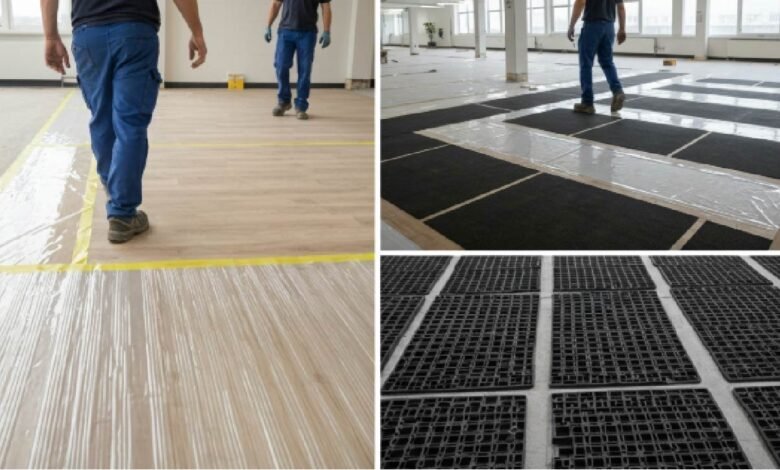
To break this cycle, modern project management requires a fundamental shift in how we budget for preservation. Hoping for the best is not a strategy. Instead, smart contractors and savvy homeowners are utilizing engineered, purpose-built temporary flooring during renovation.
This is not an upsell; it is a critical insurance policy. Professional-grade protection systems act as a heavy-duty sacrificial layer. The best systems lightly adhere directly to the surface, eliminating the trip hazards of sliding cardboard and preventing dust from creeping underneath. They are engineered to be breathable—allowing moisture to escape while blocking liquid spills—and they offer genuine impact resistance to absorb the shock of dropped tools.
Protecting the Investment
In the grand scheme of a six-figure renovation budget, the cost of proper surface protection is mathematically negligible. Yet, the cost of skipping it is catastrophic.
Replacing a deeply scratched plank of custom wood, or paying a crew to spend three days attempting to polish a chemical stain out of marble, will instantly blow up a project’s timeline and budget. The secret to a successful luxury remodel isn’t just about negotiating the best price on the materials; it is about having the foresight to fiercely protect the materials you already bought from the chaos of the build.