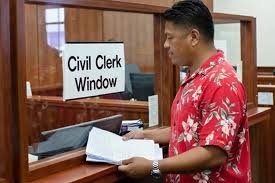
From the bustling streets of Honolulu to the most remote coastal communities, starting a civil case always begins with formally notifying the parties involved. Process serving is a required legal procedure that connects filing a complaint with the start of a courtroom case. In this article, we’ll explain the intricacies of this process in Hawaii civil litigation.
Understanding the Importance of Process Servers
In Hawaii civil litigation, process servers are responsible for the legal delivery of court documents. Their role is to ensure that these papers are handed to the correct individuals or authorized agents in strict accordance with the Hawaii Rules of Civil Procedure. This service applies to various legal matters, such as family law cases, property disputes, and other civil litigation.
Proper service is an essential part of due process. It ensures that a defendant is formally notified of the claims against them and the time within which they must appear to defend the case. If service is not performed correctly, a plaintiff may be unable to obtain a default judgment, and the court may not recognize the progression of the case.
How Process Servers Operate in Hawaii
Hawaii does not require process servers to be licensed. However, the law requires that documents be served by a sheriff, a police chief, a court-appointed person, or any non-party aged 18 or older. A unique Hawaii-specific rule prohibits personal delivery between 10:00 p.m. and 6:00 a.m. in private or restricted areas. It’s possible only if a judge specifically authorizes those hours in writing on the summons.
Hawaii law recognizes several methods for delivering documents:
- Personal Service: delivering the summons and complaint directly to the individual or an authorized agent.
- Substituted Service applies when an individual cannot be found. In this case, copies can be left at their house with an adult resident in charge.
- Corporate Service: documents must be delivered to an officer, a managing agent, or a registered agent. For defendants who are residents currently outside Hawaii, service can be made by anyone authorized to serve process in that specific jurisdiction.
Key Responsibilities of Hawaii Process Servers
Serving legal documents requires skill, strategy, and local knowledge. Let’s take a closer look at how process servers apply these in Hawaii.
Locating Recipients and Handling Difficult Service Situations
Process servers must possess extensive knowledge of local geography to reach recipients across Oahu, Maui, Kauai, and the Big Island, including hard-to-reach areas such as Hana and Princeville. When individuals are difficult to find, professional servers often employ investigative tactics or stake-out services to ensure the documents reach the intended party.
Maintaining Accurate Proof of Service for the Courts
A primary responsibility is the creation of a Return or Affidavit of Service. Once a document is successfully delivered, the server must promptly provide the court with a sworn statement detailing when, where, and to whom it was given. This affidavit serves as the verified proof the court requires to move the litigation forward.
Ensuring Confidentiality and Professionalism
Because legal matters, such as divorces or restraining orders, are often sensitive, Hawaii process servers are expected to act with discretion and punctuality. Professionalism is needed to protect the client’s interests and make sure the service is done correctly, even if it’s questioned in court.
Common Challenges in Civil Litigation Service
When defendants are hard to find or evasive, standard delivery attempts may fail, requiring skip tracing to locate the recipient’s current location or place of employment. Hawaii’s island geography can make it particularly challenging, as individuals can move between islands or hide in remote areas.
If service fails to meet the standards set by the Hawaii Rules of Civil Procedure, it can lead to significant legal delays. A judge may allow a proof of service to be amended, but only if it doesn’t cause “material prejudice” to the rights of the party being served. In many cases, improper service results in the court being unable to proceed, potentially forcing the plaintiff to restart the process and incur additional costs.
Benefits of Hiring a Professional Process Server in Hawaii
When legal deadlines are tight and rules are complex, having a trusted Hawaii process server provides a major advantage — and here’s how.
Expertise in Local Laws and Procedures
Professional services have a deep understanding of Hawaii’s specific civil procedure rules, such as the restricted hours for service and the requirements for serving corporate entities. This expertise ensures that every delivery is legally compliant from the start.
Efficient, Timely, and Reliable Service
Hiring a professional provides access to various speed options, including Rush service (first attempt within 72 hours) or Same Day service for urgent matters. These experts are dedicated to delivering documents in a timely manner, which is essential for meeting strict court deadlines.
Reducing Delays and Ensuring Court Acceptance
Experienced process servers provide a verified, notarized affidavit of service, giving the court clear proof that documents were delivered correctly. This helps prevent delays from procedural mistakes, keeps the case moving, and can save time and money. In some cases, service costs can be recovered by the winning party, adding to the overall value of professional support.
Final Thoughts on Process Serving in Hawaii
From navigating island-specific rules to handling hard-to-find recipients, professional process servers bring expertise, reliability, and efficiency to the table. They also ensure accurate delivery, proper documentation, and adherence to local laws. In a state where geography and procedure can complicate service, hiring a skilled professional is a smart investment in the success of your litigation.