


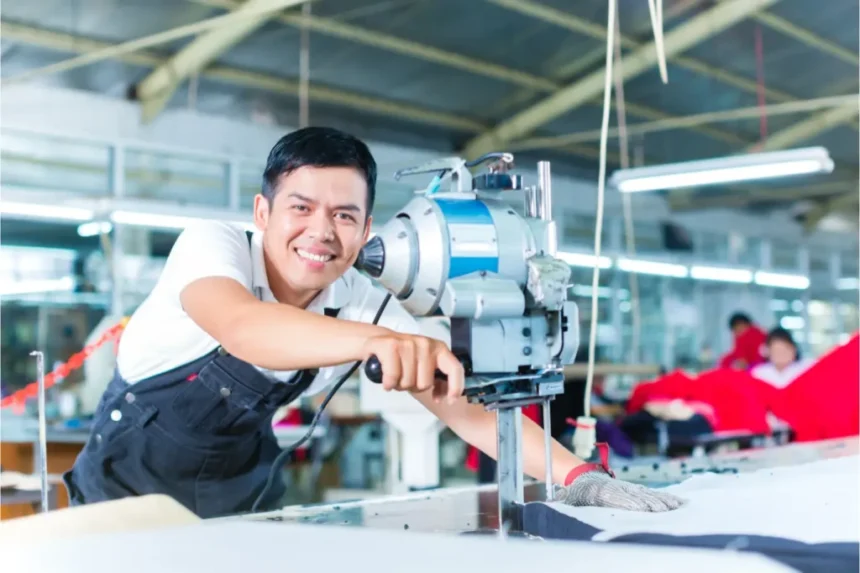
Establishing a clothing line in 2026 seems to be a great idea. The world has a big market. Nonetheless, the competition is hard. One of the vital decisions you will have to make is where to manufacture your products. Many businesspeople still regard the collaboration with chinese clothing manufacturers as a groundbreaking way to scale a brand in no time.
China is still the most important player in the international clothing sector. Its advantages are speed, quality, and price that are hard to get from other places. Nevertheless, the challenge of finding the right factory is often a big fear. But not with this practical guide. We will help you to discover, inspect, and collaborate with the factories so that you can succeed with your brand.
Key Takeaways
- China’s Supreme Position:In 2026, China is still the first option for the clothing manufacturing process. The country is proficient in transportation and has a high level of workmanship.
- Model Awareness:Decide whether you want to use OEM (your design) or ODM (their design) before contacting the factories.
- Comprehensive Vetting:Respect a rigorous partnership checklist on communication, quality, and ethics.
- Brand Protection:Use precise agreements and NNN contracts to secure your ideas from being accessed by others.
- The Power of Communication:Clear technical packs and instructions diminish mistakes that are expensive during the production phase.
Introduction: Why Source from China Clothing Manufacturers?
A large number of entrepreneurs are now questioning if China is still the number one place to produce clothes. The answer in 2026 is yes. Other nations have developed their textile industries, however, China clothing manufacturers still beat them with the most comprehensive supply chain. What that practically means is that you can get all the materials such as fabrics, trims, and the factories themselves in one place. This significantly augments the speed of the entire manufacturing process.
The Unmatched Advantage of Manufacturing in China
The main reason for choosing China as a source for clothing is that it is one of the largest and most developed industries. In recent years, China has exported over 30% of the total worldwide textile and clothing products. This lead has not been by chance. It is the result of many years of investing in machinery and logistics.
By collaborating with these production facilities, you can get access to a lot of materials. Do you need reborn polyester for a fitness outfit? Or do you want fine silk for dinner jackets? Both options are available. Another significant upside is the level of expertise of the workers. Crews in Chinese factories frequently accumulate knowledge from many years in the industry. Thus, Highly skilled workers can perform intricate sewing tasks that the factories in emerging markets may find tedious. Furthermore, language barriers and the geographical distance can be routed out if we adopt the right approach.
Understanding the Different Types of Chinese Clothing Manufacturers
Before contacting various factories, you must understand the players in the industry. Not all production factories are alike. They operate different business modes. Choosing the wrong one might cause huge financial losses and stress. You have to align your business aspirations with what the factory can actually produce.
OEM vs. ODM vs. CM – What’s the Right Fit for You?
In order to travel the wondrous world of chinese clothing manufacturers, it is essential to familiarize yourself with these three terms:
- OEM (Original Equipment Manufacturer):It is the preferred model for fashion brands. You need to provide sketches and integrations. The factory will produce the clothes exactly as per your technical specifications. This is suitable best for you if you have exclusive designs.
- ODM (Original Design Manufacturer):Factories design the product in this case. You only can choose among their catalog and add your logo. It is also known as private labeling. This is the fastest way to make an addition to the brand but it has the least design freedom.
- CM (Contract Manufacturer):This is a broad term. In most cases, it refers to a factory that handles only the “Cut and Make” process. You are responsible for getting the fabric and the designs. Therefore, you have complete autonomy, but you also bear the burden of more work.
Finding a Partner for Your Niche
Most manufacturing companies concentrate on specific product lines. A factory that produces heavy denim jeans may not be the best option for delicate swimwear. Concentrating on one area offers better results. The factory will have specialist equipment and operators for the specific garment style.
This is where you can find your partners. Take, for instance, some full-service chinese clothing manufacturers that can assist you from the design stage to the final product. This is the best place for start-up fashion brands. They have an in-depth knowledge of different materials and cuts.
Also, it would be a smart move to browse through good lists that categorize factories based on their types. You will surely find the right manufacturer classification based on their strengths that would help in your search. Zeroing in on a niche partner will extensively curtail the chances of errors and mishaps.
A Practical Guide: How to Find Reliable China Clothing Manufacturers
You already have all requirements listed. Now, where to begin? In 2026, thanks to the internet, this is quite easy. But it is still filled with noise. The only way you can easily locate competent China clothing manufacturers is having a single-minded strategy without being misled in your search.
Online B2B Marketplaces
The top B2B merchandise marketplaces like Alibaba, Global Sources, and Made-in-China.com are huge databases, and they can be your first-hand repositories to search for the pertinent suppliers. They should be your reference points. When browsing these platforms, it is advisable that you only consider “Gold Suppliers” or any other suppliers that have verified accounts. These badges indicate that the factory has passed certain checks.
However, do not solely depend on the badges. Watch the response rate. If they are taking 3 days to respond to a single question, they can be predictable slow during production too. Read their company profiles carefully. Make sure it is actually them who own the factory and that they are not just a trading company acting as a middleman.
Industry Trade Shows and Sourcing Fairs
Meeting people face to face is irreplaceable. Trade fairs give you the opportunity to touch the materials and build the relationship in the fastest time possible. Among the popular events are the Canton Fair and Intertextile Shanghai. They are considered the leading textile trade fairs in Asia with thousands of suppliers you can meet there.
If you do not want to miss the chance to participate, you have to come prepared. You should carry plenty of your business cards and a brief description of your company. A short and clear pack for your product will also do your presenting the supplier serious professional service.
Sourcing Agents and Third-Party Services
If you cannot make the trip to China and online verification seems complex, consider a sourcing agent. They are pros based in China who will find the factories for you. They are local speakers and familiar with the industry. They can also conduct quality checks. The only problem is the expense. They will require a fee or a commission. However, for many startups, peace of mind is worth the cost.
The Vetting Process: A Checklist to Avoid Costly Mistakes
The first step is locating a potential partner. Determining if they are the right choice is the second step. You should never send money to a factory without verifying them at first. A bad factory can ruin your brand with poor delivery and quality.
Your 7-Point Vetting Checklist
Use this checklist to verify all the possible manufacturers. If they fail to meet key points such as communication, quality control then you must proceed to the next.
| Criteria | What to Look For | Red Flags |
| 1. Communication | Native English contact person, a very quick replier (24 hours maximum), asks straight questions concerning your design. | Baffling answers, prolonged waits, miserable comprehension of your needs. |
| 2. Specialization | The factory has experience with your product category (e.g., activewear, denim). | They say they can “do everything,” have no samples to show or a portfolio. |
| 3. MOQ & Pricing | It must be clear that the Minimum Order Quantity (MOQ) is stated and also that the pricing structure is clear (FOB, EXW). | Very low prices compared to the industry average, reluctance to put forward a detailed price proposal. |
| 4. Quality Control | A clearly defined process for Quality Control (e.g., AQL standards), a willingness to accept third-party inspections. | No mention of QC, reluctance to allow outside inspection. |
| 5. Certifications | Company licenses, ISO, WRAP, or any relevant social/quality compliance certificates. | No credentials that can be verified are offered, or bogus certificates are identified. |
| 6. References | Offering references from other clients willingly, especially from your area. | Hesitation or refusal to give references. |
| 7. Sample Quality | Crucial Step: Request a sample. Check fabric, sewing, and accuracy to your tech pack. For example, when checking a partner like Chenglin Clothing, you would request a detailed sample to verify their work before committing to a bulk order. | Sample doesn’t match tech pack, poor quality materials, bad fit. |
Best Practices for a Successful Partnership
After settling on a chinese clothing manufacturer, the real hard work begins. Overseeing the relationship is the key. Your aim is to become their favorite customer. When they value you, they will help you with your problems and will prioritize your orders.
Master Communication: Be Overly Clear
Assume nothing. What seems apparent to you may be completely obscure to a factory worker from a different culture. Your Tech Pack serves as your bible. It must contain your sketches, measurements, fabric details, trim placements, and color codes (Pantone).
Use simple, direct English. Avoid slang or complex sayings. If possible, use diagrams and arrows to explain what you want. Make sure you put each decision in writing. If you are discussing a change on a video call, send an email immediately afterward to summarize the agreement.
Navigating Cultural Nuances
Business in China continues to be largely dependent on guanxi. This means relationships or connections. Build trust, but it takes a while. Be polite and patient. Bear in mind that holidays, for instance, the Chinese New Year (often in January/February), will cause the factory to be off for several weeks. Plan your inventory accordingly to avoid such problems. A small gift or just a warm message during their holidays can be a great step towards forming good relationships.
Protecting Your Intellectual Property (IP)
One problem that arises is the copying of clothing designs by China clothing manufacturers. To prevent this, ensure that the factory signs the NNN agreement before you send the designs in detail to them. NNN is the abbreviation of Non-disclosure, Non-use, and Non-circumvention contracts. This agreement is more solid as compared to a traditional NDA and can be pursued in Chinese courts.
Conclusion: Your Journey to Manufacturing Success Starts Now
Sourcing from China is a good way to create a prosperous fashion label in 2026. The available infrastructure and technical workers are unparalleled. Additionally, by possessing a good understanding of the distinct types of manufacturers and going through a rigorous screening process, you are already minimizing your risks.
Moreover, remember the key steps: define your niche, find potential partners through reliable means, vet them with our checklist, and communicate clearly. It requires effort. However, in turn, you will have a high-quality product that your customers will love. In addition to that, for further research, you can check the online platform which provides a list of top-tier Chinese clothing manufacturers. Associating the right chinese clothing manufacturers can be the revolution in your business.
Frequently Asked Questions (FAQ) about Chinese Clothing Manufacturers
Q1: What is a realistic MOQ for a startup working with a Chinese clothing manufacturer?
A: It really varies factory to factory and how complex the product is. Large factories that manufacture 500-1000 pieces on average per style, while medium, and smaller manufacturers are flexible. In 2026, many reliable China clothing manufacturers offer MOQs as low as 50-200 pieces, especially if it entails a small price increment per unit to recover their setup fees.
Q2: How do I handle payments safely?
A: Never pay 100% upfront. A common and relatively safe technique is a 30% upfront deposit to start production. You pay the remaining 70% only after the goods have been completed and passed a pre-shipment quality inspection. Use secure payment methods like a wire transfer (T/T) to a business bank account or a service like Alibaba Trade Assurance which offers some protection.
Q3: What is a “tech pack” and why is it so important?
A: A tech pack is a detailed blueprint for your garment. It includes technical sketches, measurements, fabric and trim details, color codes, and construction instructions. It is the single most important document for minimizing errors. It ensures the chinese clothing manufacturers produce your vision accurately rather than guessing what you want.
Q4: Can I find sustainable or eco-friendly China clothing manufacturers?
A: Yes, absolutely. The sustainable manufacturing sector in China has grown significantly in recent years. Look for manufacturers with certifications like GOTS (Global Organic Textile Standard) or those who specialize in using recycled or organic materials. Be sure to ask specific questions about their sustainable practices and wastewater management during the vetting process.
Q5: How long does the entire process take, from finding a manufacturer to receiving my order?
A: A typical timeline is 3-6 months. This includes 1-2 months for sourcing and vetting, 3-4 weeks for sampling and revisions, 30-60 days for bulk production, and 2-4 weeks for shipping. This can be faster or slower depending on your preparedness and the factory’s schedule. Always build in a buffer for unexpected delays.