Choosing the right hiking boots for summer is not as simple as picking the lightest pair on the shelf. Summer trails bring their own set of demands: heat, unpredictable weather, and terrain that ranges from dry ridge paths to wet valley floors. The footwear that handles all of this well needs to balance breathability, grip, and enough protection to keep you comfortable across a full day on the trail. This guide covers everything you need to know before buying.
Do You Actually Need Hiking Boots in Summer?
When Boots Beat Trail Runners
Summer hiking boots are the right choice when the terrain demands it. Rocky scrambles, steep descents, loose scree, and off-trail walking all call for a boot with a stiffer sole, ankle support, and durable uppers that can handle sustained contact with rough ground. If you are carrying a loaded pack for multiple days, the extra structure of a hiking boot compensates for fatigue in a way that lighter footwear cannot.
For UK hiking specifically, summer hiking boots remain the most practical option across a range of conditions. Even in July, trails in the Lake District, Snowdonia, and the Scottish Highlands can turn wet and muddy within a few hours. A boot with real grip and some level of weather resistance handles those shifts without forcing you to slow down or reconsider your route.
When to Go Lighter Instead
On well-maintained, low-level trails with dry, predictable conditions, a low-cut hiking shoe or trail runner will feel more comfortable and generate less fatigue over distance. If your summer hiking is mostly day walks on graded paths with minimal elevation change, you do not necessarily need the full structure of a mid-cut boot. The trade-off is less ankle protection and reduced durability on rough surfaces.
Key Features to Prioritise in a Summer Hiking Boot
Breathability
Breathability is the most important feature that separates a good summer hiking boot from one that will leave your feet overheated and prone to blisters after a few miles. Look for boots with mesh panels in the upper, which allow air to circulate and moisture to escape. Some boots combine a breathable membrane with a waterproof lining, which manages sweat vapour reasonably well while still keeping water out. In purely dry, warm conditions, a non-waterproofed boot with a mesh upper will outperform a Gore-Tex lined boot on breathability every time.
Weight
Weight matters more in summer than in any other season. A lighter boot reduces the energy cost of each step, which compounds significantly over distance in warm weather when fatigue sets in faster. Most quality summer hiking boots sit between 300 and 500 grams per boot. Anything heavier starts to feel punishing on a long day in the heat. Weight savings in the upper and midsole do not have to mean a sacrifice in grip or foot protection if the boot is well designed.
Waterproofing: Yes or No in Summer?
This is the most debated question in summer hiking footwear. A waterproof membrane keeps water out but also traps heat and reduces breathability. On a hot, dry day this becomes a significant comfort issue. On a typical UK summer day, where the weather can shift from sun to heavy rain within an hour, some level of waterproofing is still worth having.
The practical answer for most UK hikers is to choose a boot with a Gore-Tex or equivalent membrane for versatility, accept the slight breathability trade-off, and prioritise a boot with the most open, ventilated upper construction available within that category. If you hike exclusively in dry climates or reliably good weather, a non-waterproof boot with a fast-drying mesh upper is the more comfortable summer option.
Traction and Outsole
Summer trails in the UK often combine dry hardpack with patches of mud, wet rock, and grass. A Vibram outsole or equivalent high-rubber-content compound with deep, multidirectional lugs handles this variety well. Lug depth of around four to five millimetres is effective across most summer terrain without being so aggressive that the boot becomes uncomfortable on firm ground. Self-cleaning lug patterns, where the gaps between lugs are wide enough to shed mud rather than pack it in, are worth prioritising for UK conditions.
Boot Height: Mid vs Low Cut for Summer
Mid-Cut Boots
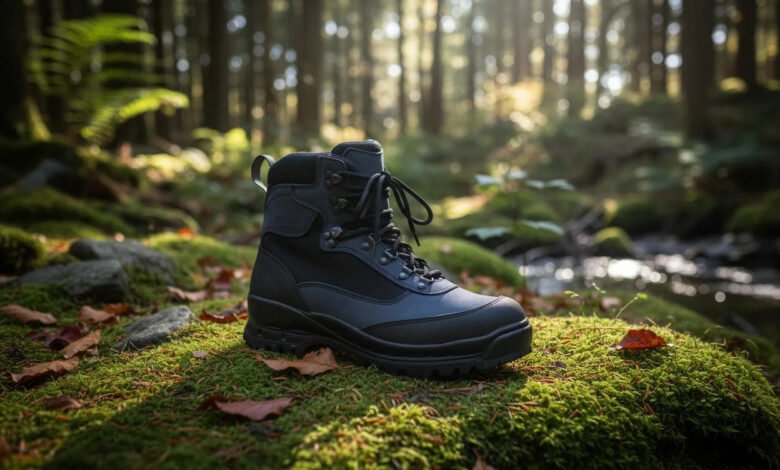
Mid-cut hiking boots for summer sit roughly at or just above the ankle and offer a balance between support and freedom of movement. They provide meaningful ankle stability on uneven terrain without the full weight and heat retention of a high-cut boot. For most summer hiking in the UK, including hill walking, coastal paths, and mountain day hikes, a mid-cut boot is the most versatile choice. It handles rough terrain well and still feels manageable on longer, lower-level routes.
Low-Cut Boots and Hiking Shoes
Low-cut summer hiking boots and hiking shoes sacrifice ankle support for weight savings and increased freedom of movement. They are the right choice for experienced hikers with strong ankles who are covering well-maintained trails or moving fast over moderate terrain. The reduced shaft height also improves ventilation significantly, making them the more comfortable option in genuinely hot conditions. The downside is that they offer less protection from debris entering the boot and less stability on technical ground.
Summer Hiking in the UK: What Makes It Different
Unpredictable Weather and Wet Trails
UK summer weather does not follow the same rules as continental Europe. A warm morning in the Peak District or on the South Downs can turn cold and wet by early afternoon, and high-level routes in Wales or Scotland regularly see rain and low cloud even in the height of summer. This means that summer hiking boots for UK trails need to be more versatile than their equivalents designed for reliably hot, dry climates.
Waterproof boots with breathable membranes remain the most practical choice for most UK summer hiking, particularly on multi-day routes or any walk above five hundred metres. On lower-level trails with a reliable forecast, a breathable non-waterproof boot is a reasonable option for a day out.
Terrain Considerations
UK summer trails span a wide range of surfaces. Well-maintained National Trail paths are firm and relatively forgiving. Moorland and mountain routes can be boggy and loose even in dry weather. Coastal paths combine grass, rock, and loose soil that shifts underfoot. A summer hiking boot with a versatile, multi-surface outsole and enough upper protection to handle all of these is more useful than a boot optimised for a single terrain type.
How to Care for Hiking Boots in Summer
Drying and Airing Out
Summer hiking boots that get wet, whether from rain, stream crossings, or sweat, need to be dried properly after each use. Remove the insoles and laces and allow the boot to air at room temperature. Never dry boots directly on a radiator or in direct sunlight, as high heat degrades adhesives and can warp the midsole. Stuffing the boots loosely with newspaper draws moisture out of the lining and upper more quickly than leaving them empty.
Reproofing and Maintenance
The durable water repellent finish on the outer of most summer hiking boots gradually wears away with use and washing. When you notice water no longer beading off the surface and is instead soaking into the upper, it is time to reproof. A spray-on or wash-in DWR treatment applied after cleaning restores the repellency. For leather uppers, a conditioning wax applied every few months keeps the material supple and maintains its water resistance.
What to Wear with Summer Hiking Boots
Socks
The right sock makes a significant difference to how summer hiking boots feel over a full day. A moisture-wicking merino wool or synthetic blend sock manages sweat effectively and reduces friction that leads to blisters. Avoid cotton socks entirely: they absorb moisture and hold it against the skin, creating exactly the conditions that cause hotspots. A medium-weight hiking sock with some cushioning at the heel and ball of the foot is the most versatile option for summer use.
Trousers and Shorts
Summer hiking boots work well with both shorts and lightweight hiking trousers. With shorts, the boot shaft is fully visible, so a clean, mid-cut boot with a more streamlined profile looks better than a heavily lugged, high-cut mountaineering style. With trousers, the hem should sit just above the boot collar to prevent the fabric from catching on the lacing or bunching into the top of the boot. Convertible hiking trousers that zip off at the knee give you flexibility to adjust to changing conditions on the trail.
Find the Right Hiking Boots for Summer
Getting the right pair of summer hiking boots comes down to matching the boot to the terrain, the conditions, and the distance you are covering. A versatile, well-built boot that handles the unpredictability of UK summer weather will serve you across a far wider range of outings than one optimised for a single use case.
Buzza Store’s hiking boots collection covers a range of styles suited to summer trail use, from lightweight low-cut options for fast day hikes to more structured mid-cut boots for technical terrain and longer routes. It is a practical starting point if you want boots built for real conditions rather than ideal ones.
For everything else you need to get out on the trail this summer, buzzastore brings together outdoor and lifestyle footwear across a range of styles and price points, with options that work across the varied conditions UK summer hiking tends to throw at you.